The Modern Gold Rush: Part I – Why Your Locker may be the Wrong Place for Your Wealth
Feb 16, 2026

For most Indians, gold isn't just a metal; it’s an emotion, an heirloom, and a safety net rolled into one. But let’s face the hard truth: that heavy gold chain sitting in your bank locker gathering dust isn't working for you—it’s barely keeping up with inflation after you deduct the "making charges." In this first chapter, we are ditching the outdated habit of physical hoarding to explore the sleek, high-speed world of "Financial Gold." We will breakdown how to trade the hassle of lockers and purity tests for the efficiency of ETFs and Mutual Funds, where your investment moves as fast as the market.
The Fundamental Shift: Physical vs. Financial
For centuries, the Indian approach to gold was simple: buy jewellery or coins, lock them in a vault, and forget them. While this works for cultural or consumption purposes, it is a sub-optimal investment strategy. The friction costs in physical gold are immense. When you buy jewellery, you pay 10–25% in making charges, which is essentially an upfront loss. Even with coins or bars, the "buy-sell spread"—the difference between the price a jeweller sells to you and the price they buy back at—can range from 3% to 5%. Most jewellers levy making charges on gold coins as well. Furthermore, storage costs (bank lockers) and the risk of theft add invisible drags on returns.
"Financial Gold" solves these issues by dematerializing the asset. The primary vehicles for this in India are Exchange Traded Funds (ETFs) and Mutual Funds (Fund of Funds). These instruments track the domestic price of physical gold/silver (usually of 99.5% or 99.9% purity) but remove the friction of storage, making charges, and purity testing.
We urge investors to avoid ‘Digital Gold/E-Gold’ options offered on online platforms since these options are not regulated by SEBI and could result in counterparty and operational risks for investors.
The Mechanics of Gold and Silver ETFs
An ETF is a security that trades on the stock exchange (NSE/BSE) like a regular stock.
Backing: For every unit of a Gold ETF you buy, the fund house (AMC) holds a corresponding quantity of physical gold in a secure vault.
Liquidity: They offer real-time liquidity. You can buy or sell units at any point during market hours (9:15 AM to 3:30 PM).
Prerequisites: You strictly need a Demat and Trading account to transact in ETFs.
Cost Structure: ETFs are generally the cheapest option, with expense ratios often ranging between 0.1% and 0.5%. However, you must account for brokerage charges and the "impact cost" (the difference between the buying and selling price in the order book), which we will discuss in Part III of our blog.
The Mechanics of Gold/Silver Mutual Funds (FoFs)
For investors who do not wish to open a Demat account or who prefer the discipline of automation, Gold/Silver Mutual Funds are the ideal solution. These are structurally "Fund of Funds" (FoFs).
Structure: When you invest in a Gold Mutual Fund, the fund manager takes your money and invests it into their own Gold ETF. You are essentially buying a fund that buys an ETF.
The SIP Advantage: The single biggest advantage of the Mutual Fund route is the ability to set up a Systematic Investment Plan (SIP). You can automate an investment of as little as ₹500/month. Doing this with ETFs requires manual intervention every month during market hours.
Cost Structure: These funds have slightly higher expense ratios than ETFs because you bear the recurring expenses of the FoF plus the underlying ETF. However, for long-term investors, the convenience of SIP often outweighs this marginal cost difference.
The "Silver" Rush: A Different Beast
Investing in silver requires a different mindset than gold. While gold is a monetary asset (a hedge against inflation and currency devaluation), silver is primarily an industrial metal. Approximately 50-60% of silver demand comes from industries—electronics, solar panels (photovoltaics), and EV batteries.
Implication: Silver prices are more correlated with the economic cycle. If the global economy booms, industrial demand spikes, and silver often outperforms gold. Conversely, in a recession, industrial demand collapses, and silver can fall much sharper than gold. This makes silver a "high beta" play—higher risk, higher potential reward.
Sovereign Gold Bonds (SGBs) – A sunset vehicle
SGBs have been a compelling way for Indian investors to own gold - offering 2.5% annual interest, sovereign-backing and tax-free capital gains, if held to maturity. However, the opportunity set has narrowed as fresh issuances have been stopped by the govt. As a result, it is not possible to buy SGBs from the primary market thereby pushing investors into thinly traded secondary lots with pricing inefficiencies. Further, recent tax changes have limited the capital-gains exemption largely to original subscribers who hold to redemption, eroding the post-tax appeal for secondary buyers. In this context, gold ETFs or funds may now offer cleaner liquidity and tax clarity for incremental gold exposure, while legacy SGB holdings remain valuable core diversifiers.
Taxation Landscape
Understanding the tax implications is critical for calculating net returns. Following recent amendments in tax laws:
Short Term Capital Gains (STCG): If you sell your units (ETF or Mutual Fund) before the defined long-term threshold, the gains are added to your annual income and taxed according to your income tax slab.
Long Term Capital Gains (LTCG):
Listed Assets (ETFs): Typically, if held for more than 12 months, gains are taxed at a flat rate of 12.5% (without indexation).
Unlisted Assets (Mutual Funds/FoFs): Due to their classification, the holding period to qualify as "Long Term" is generally 24 months. Gains after this period are taxed at 12.5%.
Note: Always verify the specific classification of the scheme (Equity-oriented vs. Debt/Other-oriented) in the Scheme Information Document, as tax definitions can be fluid based on the exact percentage of domestic equity holding.
Now that we have cleared the basics, let us learn more about asset allocation of gold in our overall portfolio in Part II of our blog.
Read more from our Blogs

Feb 18, 2026
The Modern Gold Rush: Part III - The Silent Thieves – Hidden Costs, Tracking Errors, and the FOMO Trap

Feb 17, 2026
The Modern Gold Rush: Part II - The Art of the Mix – How Much Gold is Too Much?

Feb 2, 2026
The Union Budget 2026 - Takeways for Mutual Fund Distributors

Jan 28, 2026
Decoding Debt Mutual Funds (Part III – The Decision Making)
Jan 27, 2026
Decoding Debt Mutual Funds (Part II - Where they stand in the fixed income landscape?)
Jan 26, 2026
Decoding Debt Mutual Funds (Part 1 – The Basics)

Jan 27, 2026
The Retail Tsunami: Dissecting 6 Years of Mutual Fund Growth (2019-2025)

Jan 5, 2026
Changes in Fund Manager - December 2025

Dec 26, 2025
Know Your Mutual Fund House (SBI MF)

Dec 24, 2025
The Long Road to “Mutual Funds Sahi Hai” – A History of Mutual Funds

Jan 16, 2026
Less Is More: A Simple Take on Focused Mutual Funds

Dec 31, 2025
Our Mutual Fund Ranking Framework
Jan 19, 2026
Turn Mutual Funds Into Monthly Income (Part 3 - Key SWP Decisions)
Jan 19, 2026
Turn Mutual Funds Into Monthly Income (Part 2 - Systematic Withdrawal Plans - Reverse SIPs)
Jan 19, 2026
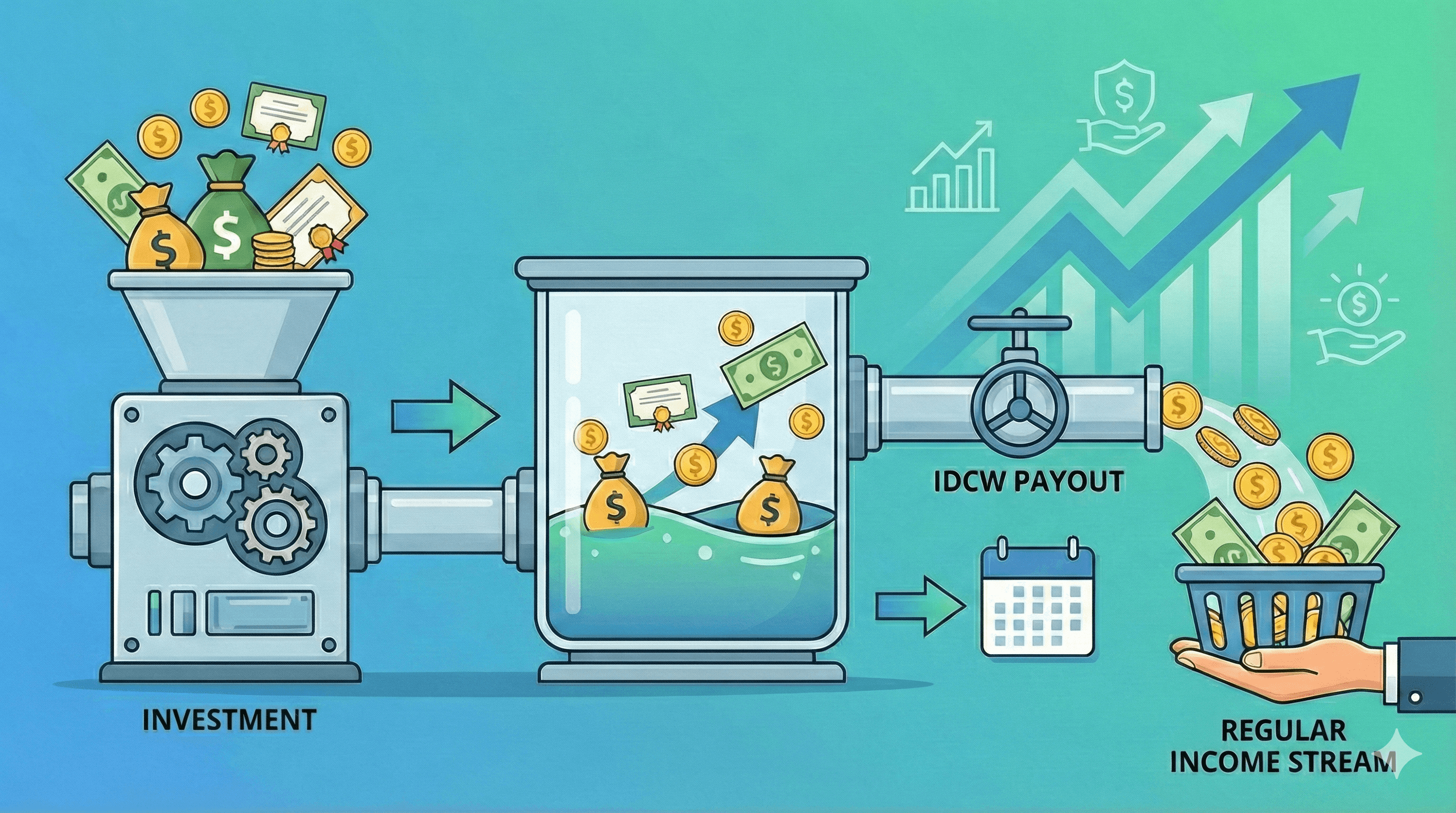
Turn Mutual Funds Into Monthly Income (Part 1 - Stocks Give Dividends, Mutual Funds Have IDCW)
Dec 5, 2025
Changes in Fund Manager - November 2025

Dec 4, 2025
Coffee with Creso: Spark more client conversations, one coffee at a time

Dec 1, 2025
You’ve Checked the Returns - But Have You Checked the Taxes? (Part 3 - Taxation for NRIs)

Jan 19, 2026
Going Global: How Indian Mutual Funds Let You Invest Beyond Borders
Nov 19, 2025
You’ve Checked The Returns, But Have You Checked The Taxes? (Part 2: Making Smarter Choices)

Nov 18, 2025
You’ve Checked the Returns, But Have You Checked the Taxes? (Part 1:The Basics)

Oct 14, 2025
How Clients Can Change Email or Mobile on MFCentral (Guide for MFDs)

Sep 3, 2025
GST 2025 for MFDs and Insurance Agents: What Changed, What Didn’t

Aug 28, 2025
How to Open a Minor’s Mutual Fund Account in India

Aug 3, 2025
Change of Broker in Mutual Funds
Partners in prosperity